
DK Science: Senses
To find food, mate, avoid danger, and communicate, animals rely on information gathered by their senses. Information is processed by their nervous system, which tells their bodies how to respond to stimulation from their surroundings. Some animals have groups of sensory cells that do little more than register light. More advanced animals use a combination of VISION, HEARING, SMELL, and touch.
Tigers have remarkable senses. Their acute sense of hearing is used to locate prey in dense undergrowth. Binocular vision (vision with two forward-facing eyes) gives them the ability to judge distance accurately and see well in the dark. Their whiskers act as touch detectors, which help them find their way when hunting at night. Tigers also have an excellent sense of smell.
Catfish are so called because of their whisker-like, fleshy barbels. They use them to feel their way around in murky river water to find food. Most other animals have touch-sensitive receptors all over their bodies. Antelopes, for example, twitch when even the tiniest of insects land on them.
Animal eyes may look very different from one another but they all respond to light. Some eyes may be simple, like those of an earthworm, which merely help it to move away from light and stay underground. Alternatively, eyes may contain complex structures which allow an animal to focus and see distinct images. The position of the eyes is also important. Being able to see all around is vital if you are a prey animal such as a rabbit, whereas being able to judge distances is important for hunters and tree dwellers.
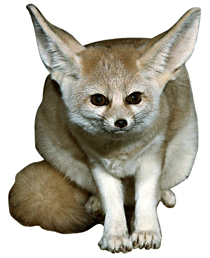
Hearing is the ability to detect sound waves. It is important for communication, finding a mate, and hunting for prey. The main organ concerned with hearing is the ear. An important part of the ear is a tightly stretched membrane called an eardrum, which vibrates when it picks up sound. Some animals interpret vibrations through other parts of their bodies. Snakes are able to sense sound through their bellies.
Smell is one of the two chemical senses, the other being taste. Humans have a relatively poor sense of smell, but it is a vital means of communication to many creatures. Scent can be used to mark territory, and to attract a mate. It also allows animals to track and find food.

A good sense of smell is necessary for many animals to find food. Fruit bats navigate by sight but locate ripening fruit, such as mangoes, by their scent. Many carnivores track their prey by smell. Wolves can tell their prey’s sex, age, and state of health from its smell.
Some insects, including ants, beetles, and moths, smell using antennae. Females release chemicals called pheromones to attract a mate. Males can home in on the female from distances of 8 km (5 miles) or more. In an emergency, some ants can produce an alarm pheromone to get other ants to assist them.
