
DK Science: Nuclear Energy
Atoms are small but can release lots of energy. When an unstable atom changes into a more stable one, it gives off radioactivity. It also gives off some of the potential energy locked inside the nucleus of the atom. Some atoms can be made to produce a constant supply of nuclear energy in a process called a chain reaction. Nuclear energy makes possible the destructive power of nuclear bombs, but it also generates much of the world’s electricity.
When a nuclear bomb detonates, it starts a runaway chain reaction and releases enormous amounts of energy very quickly. A lump of radioactive plutonium the size of a tennis ball can produce as much energy as tens of thousands of tons of powerful explosives.
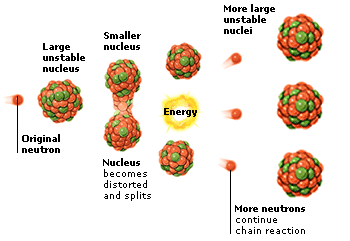
In nuclear fission (splitting), large atoms break into smaller ones and give off energy. When a neutron is fired at the nucleus of a large atom, the atom becomes unstable and splits into two smaller atoms. Energy is produced and some neutrons are given off too. They collide with more large unstable nuclei of the original material and continue the chain reaction.
In nuclear fusion (joining), massive energy is given off when small atoms fuse together to make larger atoms. A neutron is released at the same time. Stars like the Sun make their energy when nuclear fusion happens inside them at extremely high temperatures and pressures. Scientists are hoping that nuclear power stations will one day use fusion to provide Earth with a clean and inexpensive source of energy.

Physicist Lise Meitner was one of the first to explain the process of nuclear fission. She also predicted the idea of the nuclear chain reaction before anyone had managed to make it work. She supported development of nuclear power, but opposed the production of nuclear bombs.
