
DK Science: Immune System
The role of the immune system is to protect the body against germs and cancers. When it detects substances that it recognizes as abnormal or foreign to the body, the system mounts an IMMUNE RESPONSE. Its chief weapons are cells called lymphocytes. Some of these are carried in lymph – excess body fluid that drains into the blood via a system of vessels and nodes.
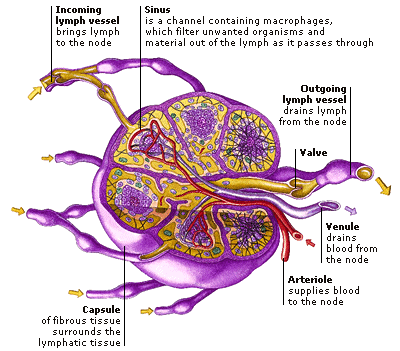
Lymph nodes are swellings of tissue found at intervals along lymph vessels. They make and store lymphocytes, which are added to lymph before it joins the blood. They also house other types of white cell called macrophages. Lymph nodes vary from 0.1 to 3 cm (1/25 to 1 1/4 in) in diameter.
The system consists of a network of vessels and collections of tissue called lymphoid tissue. It collects excess fluid (lymph) from the body’s tissues, returns this fluid to the blood, and stores and transports cells of the immune system, such as lymphocytes.
When the immune system detects an invading organism, it mounts a response in two main ways. Some lymphocytes attack the invader directly. Others produce substances called antibodies that promote the organism’s destruction. The immune system retains a memory of different invaders and mounts a more rapid and effective response when it encounters one for the second time. This form of memorized protection is called immunity.
