Geography
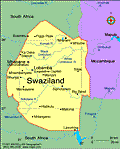
Eswatini, which is about 85% the size of New Jersey, is surrounded by South Africa and Mozambique. The country is largely mountainous.
Government
Absolute monarchy.
History
Bantu peoples migrated southwest to the area of Mozambique in the 16th century. A number of clans broke away from the main body in the 18th century and settled in Eswatini. In the 19th century these clans organized as a tribe, partly because they were in constant conflict with the Zulu. Their ruler, Mswazi, appealed to the British in the 1840s for help against the Zulu. The British and the Transvaal governments guaranteed the independence of Eswatini in 1881.
South Africa held Eswatini as a protectorate from 1894 to 1899, but after the Boer War, in 1902, Eswatini was transferred to British administration. The paramount chief was recognized as the native authority in 1941. In 1963, the territory was constituted a protectorate, and on Sept. 6, 1968, it became the independent nation of Eswatini.
Since 1986, King Mswati III has ruled as sub-Saharan Africa's last absolute monarch. Political parties are banned and the king appoints 10 of the 65 members of parliament as well as the prime minister. King Mswati can veto any law passed by the legislature and frequently rules by decree.
In 2002, hundreds of thousands of Swazis faced starvation. Two years of drought as well as bad planning and poor agricultural practices were blamed for the crisis. The government came under criticism for buying the king a $50-million luxury jet—a quarter of the national budget—while famine loomed. In 2002, the country's judges resigned en masse in protest of the government's refusal to comply with court decisions. In April 2003, the government information minister announced that the media were banned from making negative remarks about the government—criticism of the king's new luxury jet in particular would not be tolerated. In 2004, a third year of drought befell the country. International donor agencies and human rights groups condemned the king's plans to build new multimillion-dollar palaces for each of his 11 wives (12 by 2005) while his people faced starvation and the country's AIDS epidemic spiraled out of control. About 30% of the population is infected.
Although the king signed the country's first constitution in Aug. 2005, the document essentially maintains the status quo: opposition parties remain banned and the king retains ultimate power.
See also Encyclopedia: Swaziland .
U.S. State Dept. Country Notes: Swaziland