
DK Science: Growth
The processes of growth and development continue throughout life. They include physical changes, such as the increase in height that occurs throughout childhood, and mental changes, such as the continual development of new skills from early childhood onwards. One distinct phase of growth is PUBERTY, the time when boys’ and girls’ reproductive systems mature. As life continues, the body has a constant need for new cells to repair its worn out parts. AGEING is a natural part of the life process that results from some slowing of this capacity for self-renewal.
The skull increases in size during childhood to accommodate the growing brain. At birth, the bones of the skull are separated by gaps, filled with fibrous tissue, called fontanelles. The anterior fontanelle closes at around 18 months. The posterior fontanelle, located farther back, closes at the age of 3 months.
At birth, the skeleton is made largely of cartilage. Ossification, when cartilage changes to bone, continues throughout childhood and adolescence. It is finished by the age of about 20 years. Cells called osteoblasts are responsible for this; they produce a substance that forms bone when calcium is added to it.
By around this age, many babies can grasp an object between forefinger and thumb, can eat with their fingers, walk holding on to furniture, and can say “dada” and “mama”.
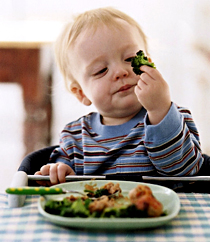
Many babies of this age have progressed to drinking from a cup. They can take off shoes and socks, turn pages, and enjoy scribbling. Some can point to their eyes, nose, and mouth.
Toddlers aged around 2 years can usually build a tower of four bricks, kick a ball, point to parts of the body, eat with a fork and spoon, and undress without help. Some are able to draw a straight line.
Children aged around 3 years can usually eat with a knife and fork. Most can copy a circle, talk in short sentences, pedal a tricycle, and run fast. Many know their first and last names.

Many 4-year-old children are able to dress without help, and can draw a simple picture of a man. They can copy a square and a cross, can count up to 10, and can brush their own teeth.
Puberty occurs between the ages of about 10 and 14 in girls and between 12 and 15 in boys. Hormonal changes promote rapid growth, changes in body shape, and development of the reproductive organs. In girls, the menstrual cycle begins. In boys, the testes start to produce sperm. As childhood ends, boys and girls become more self-aware and independent.
A common condition affecting both boys and girls during puberty is a type of skin inflammation called acne. It is caused by excessive production of an oily substance, sebum, by the skin, as a result of hormonal changes. The sebum can block hair follicles, providing a site for bacteria to multiply.
During a girl’s teenage years, the immature eggs present in her ovaries at birth begin to develop and are released on a monthly basis. The lining of the uterus thickens every month in preparation for a fertilized egg. However, fertilization does not usually occur and the lining is shed as a period. The menstrual cycle is controlled by hormones produced by the pituitary gland and by the ovaries.
As well as the pubic and armpit hair that appears in girls and boys at puberty, boys develop hair on the face and often the chest. This new hair growth is caused by an increase in the male hormone testosterone. In addition, a boy’s voice deepens as his voice box gets bigger and the vocal cords lengthen.
As the body ages, the turnover of its cells slows. The skin loses some of its elasticity and wrinkles develop. The bones of the skeleton slowly become less dense. The capacity of the body to repair itself is gradually reduced; wounds take longer to heal and broken bones longer to mend. The eye’s capacity to focus lessens, and by the age of 50 many people need reading glasses. However, the lifelong accumulation of skills and knowledge means that many people find old age to be one of the most enjoyable parts of their lives.
