
DK Science: Forces
From the movements of the planets to the energy produced inside atoms, everything that happens in the Universe is ultimately caused by forces. A force is a push or pull that can make an object move or TURN around. The bigger the force, the more movement it can produce. When two or more forces act together on an object, their effects are COMBINED. Sometimes the forces add together to make a larger force, and sometimes they cancel each other out.
Forces are measured in units called newtons (N), named after English scientist Sir Isaac Newton. The size of a force can be measured using a device called a force meter or newtonmeter. As the load pulls on the hook, it stretches a spring to give a reading on the scale. On Earth, the force of gravity on 1 kg (2.2 lb) is 9.8 newtons.
If an object is fixed at one point and can rotate around it, that point is called a pivot. If a force acts on the object, the object turns around the pivot. The turning force is called a torque and the effect it produces is called a moment. The bigger the force, the greater the moment. The moment also increases if the force acts at a greater distance from the pivot.
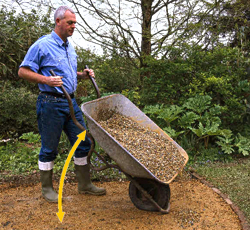
A wheelbarrow is free to pivot around the large wheel at the front. When the worker lifts the handles, the force causes the entire wheelbarrow to swing upwards and turn around the wheel. The long body and handles of a wheelbarrow increase the turning effect and make it easier to tip out a heavy load.
It is easier to unscrew a nut with a spanner than with your fingers, because the spanner’s long handle increases the turning effect or moment of the force. The size of a moment is equal to the force used times the distance from the pivot on which it acts. If you use a spanner twice as long, you double the moment, and the nut is twice as easy to turn.
When forces act in the same direction, they combine to make a bigger force. When they act in opposite directions, they can cancel one another out. If the forces acting on an object balance, the object does not move, but may change shape. If the forces combine to make an overall force in one direction, the object moves in that direction.
A suspension bridge has to support the weight of its own deck, plus the weight of the vehicles that go across it. The deck of the bridge hangs from huge steel cables suspended over giant pillars. The cables and pillars are arranged so that there is no overall force in any direction. A bridge stays up because the forces on it are balanced and cancel one another out.
